What Is Ann Arbor Like Across Four Seasons?
Ann Arbor has four distinct seasons in the way many parts of the upper Midwest do: a cold snowy winter, a slow muddy spring, a humid green summer, and a cool clear fall with strong color. The city's environmental identity is anchored by the Huron River, which curves through town from north of campus down through the city and into the parks south of central. The river produces the trail system, the canoe and kayak culture, and most of the green corridor a visiting family experiences during a campus walk.
For an international family planning a visit, the season changes more than the temperature. It changes what the campus looks like, what students are doing, what the family can pack into a day, and what the practical experience of being on campus feels like. This guide walks the seasonal rhythm, the parks along the river, the winter packing checklist, and how visit timing changes the visit itself.
The Huron River as the Environmental Spine
The Huron River runs west to east across southeastern Michigan, passing through Ann Arbor on its way to Lake Erie. Within the city, the river produces a continuous corridor of public parks, trails, and natural areas: a band of green that defines the northern edge of central campus and the southeastern part of the city.
The major river-adjacent parks, in roughly upstream-to-downstream order through Ann Arbor:
- Bandemer Park — north of the city, with woodland trails and access to the river above the dam at Argo.
- Argo Park and the Argo Cascades — the engineered chute that carries kayaks and canoes around the Argo Dam. The cascades are one of the most-used summer recreation features in the city; the Argo Livery rents canoes, kayaks, and tubes in season.
- Nichols Arboretum ("the Arb") — the U-M-managed 123-acre arboretum on the south bank of the river, walking distance from Central Campus. Famous for the peony garden (peak bloom typically late May to mid-June), and a year-round destination for students.
- Gallup Park — the largest of the river-front parks, with paved walking paths along the river and Geddes Pond, a footbridge to a small island, and the Gallup Park Livery for canoe and kayak rental.
- Matthaei Botanical Gardens — U-M's botanical garden complex, a few miles east of campus, with greenhouses, outdoor gardens, and a network of nature trails. Free admission; greenhouse hours vary seasonally.
The Huron River Watershed connects most of these spaces with a continuous trail system; the Border-to-Border Trail runs along the river through the city and continues east and west across the county.
Fall (September–November)
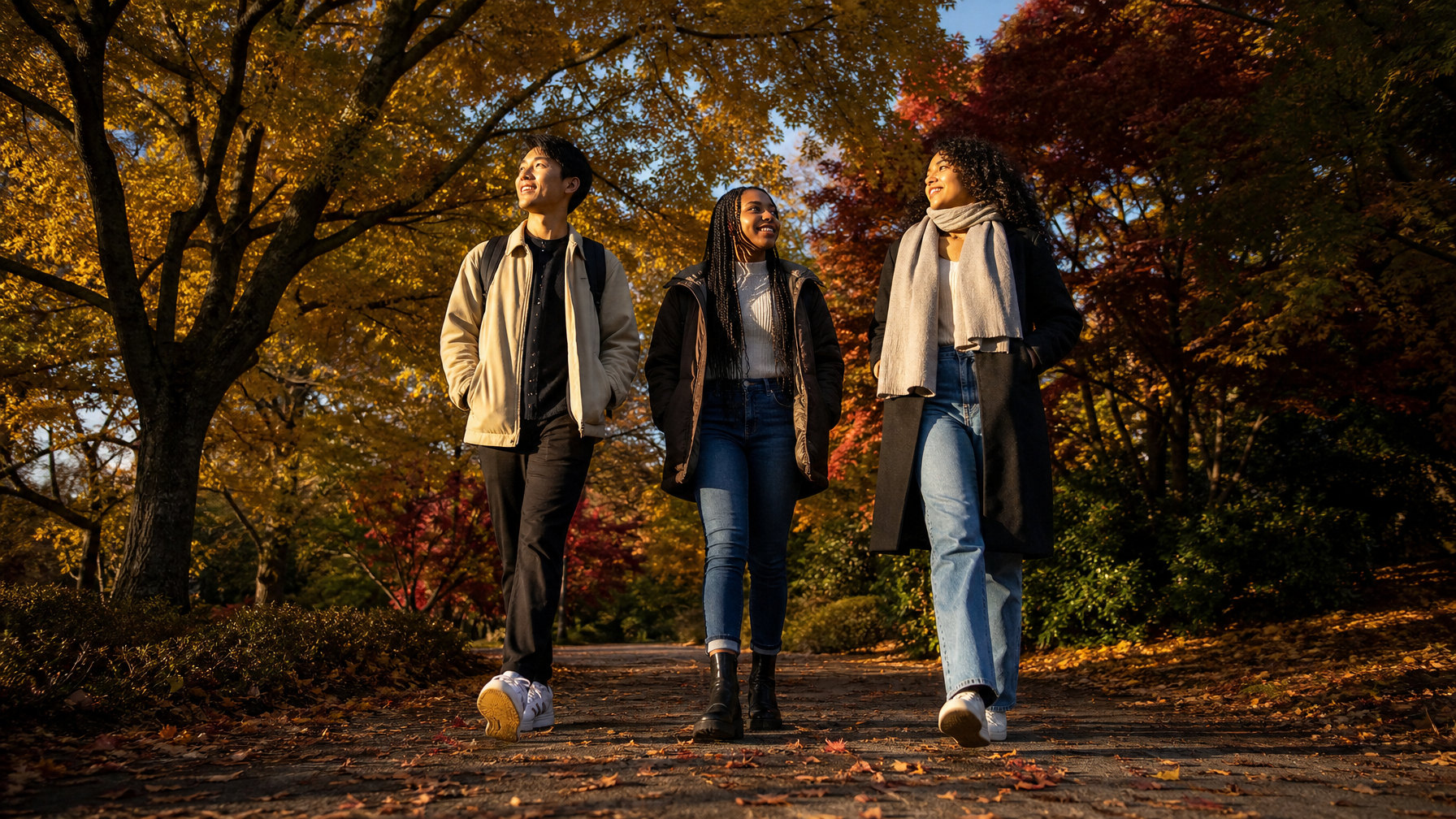
Fall is the season most international families pick for a visit, and with reason. From mid-September through late October, the campus and the surrounding parks are at their most photogenic. The leaves on the maples, oaks, and beeches turn through yellow, orange, and deep red. Football Saturdays produce a specific civic energy that only this season has. The temperature is comfortable for walking — typical highs in the 50s and 60s Fahrenheit (10–20°C) — and the humidity that defines summer has dropped.
Practical fall notes:
- Peak fall color in Ann Arbor is typically mid-October. A campus visit in the second or third week of October has the best chance of catching peak.
- Football home games transform the city; verify the home schedule and decide whether you want a game-day visit or a non-game-day visit. The contrast is significant.
- Layering is essential. A 70°F afternoon and a 45°F early morning is normal in October.
- Rain is intermittent but not constant; bring a light rain jacket.
- Daylight gets shorter quickly through October and November. By Halloween, the sun sets before 6:30 PM.
By late November, fall transitions toward winter. Leaves are off the trees; the first snow can fall in late November or December.
Winter (December–March)
Winter in Ann Arbor is real. From December through March, the average daily high is in the 30s Fahrenheit (around 0–5°C), with regular periods well below freezing. Snow falls intermittently across the entire winter; total seasonal snowfall is typically 40–50 inches (about a meter), spread across many smaller storms rather than a few large ones. Lake-effect snow from Lake Michigan can occasionally amplify the totals, though Ann Arbor is east of the most-affected lake-effect zones.
For a visiting international family, winter requires more preparation than visits to coastal-California or Sun Belt schools. A few practical points:
- Boots, not sneakers. Sidewalks and crosswalks accumulate slush, ice, and salt. Waterproof boots with treaded soles are the right footwear; sneakers will be soaked and cold within an hour.
- A real winter coat. A down or synthetic-fill coat that reaches mid-thigh or longer; a light "transitional" jacket is not enough between December and February.
- Gloves and a hat. Hands and head lose heat fastest. Both should be on for any walk longer than 5 minutes.
- Layering underneath. A long-sleeve base layer plus a sweater plus the coat is the standard combination. Adjust by activity.
- Sunglasses for snow days. Sun reflecting off fresh snow is genuinely bright.
Winter also changes student life on campus. Indoor study spaces (Hatcher Library, Shapiro Library, the Michigan Union, Pierpont Commons, Espresso Royale, Literati Bookstore, and others) become the daily landmarks. The bus system between Central and North runs all winter; the buses are heated and reasonably reliable. Walking distances feel longer in winter — a "10-minute walk" that is comfortable in October takes more bundled-up minutes in February.
For prospective applicants, a winter visit is the most accurate window into what daily life will actually feel like for four years. Many international students who only visit in fall or summer arrive in August unprepared for the winter; a January or February visit changes that.
Spring (April–May)
Spring in Ann Arbor is shorter than fall and notably less photogenic. From late March into April, the snow melts unevenly; the ground turns muddy; the trees stay bare longer than in warmer climates. April can have surprising cold snaps and even late-season snow. By early May the trees finally leaf out, and by mid-May the city is convincingly spring.
The single most photogenic moment of Ann Arbor spring is the peony bloom in Nichols Arboretum, which typically peaks in late May to mid-June. The peony garden was established in 1922 and contains hundreds of varieties of historic peonies. Bloom timing varies year to year with weather; check the Nichols Arboretum site for current bloom updates if peony viewing is part of your visit goal.
Spring is also when U-M commencement happens (typically late April). The week around commencement is busy with family travel, hotel scarcity, and crowded restaurants; visit planning during commencement weekend should account for this.
Summer (June–August)
Summer in Ann Arbor is humid and green. Highs typically reach the upper 70s to mid-80s Fahrenheit (25–30°C) with regular humid stretches; nights cool into the 60s (15–20°C). Thunderstorms move through in the afternoon during many summer weeks; rainfall is more concentrated than in spring or fall.
Campus is quieter in the summer — undergraduate enrollment drops sharply between commencement in late April and the start of fall term in late August. The summer is when:
- The Ann Arbor Art Fair (typically mid-July) shuts down central streets for one of the largest outdoor art events in the United States — verify current dates.
- The Argo Cascades and Gallup Park Livery reach peak use; lines for kayak and canoe rentals are real on weekends.
- The Matthaei Botanical Gardens outdoor gardens are at their fullest.
- Tour availability at U-M can be more limited; verify in advance, because some school-specific tours pause in the summer.
Summer is a reasonable time for a campus visit, especially for families who can only travel during school break. The trade-off is that the academic-year energy is muted and class observations are mostly impossible.
Biking and Walking Culture
Ann Arbor is a bike-friendly city by Midwestern standards. The Border-to-Border Trail runs along the Huron River; many city streets have dedicated bike lanes; and U-M operates the MoBi bikeshare program with stations across central campus and downtown. From April through October, biking is a meaningful part of student life.
Winter biking is possible but uncommon. Most students switch to walking and the bus system from December through March. Visitors who want to bike should plan their visit for May through October.
Walking is good year-round. Central campus, downtown, Kerrytown, and South University are all within a 15-minute walk of each other. The walk between Central Campus and North Campus is approximately 25 minutes and crosses the river; most students take the U-M shuttle for that route, but in good weather the walk is genuinely pleasant.
A Packing Checklist by Month
| Month | Top Layers | Bottom Layers | Footwear | Other |
|---|---|---|---|---|
| December–February | Down or synthetic-fill coat (mid-thigh+), sweater, base layer | Insulated or thick pants; thermal long underwear if walking outside extensively | Waterproof winter boots with traction | Gloves, knit hat, scarf, sunglasses for sunny snow days |
| March | Coat, sweater | Pants | Waterproof shoes or boots (mud and slush) | Gloves and hat in early March |
| April | Light coat or jacket, sweater | Pants | Sneakers or waterproof shoes | Light rain jacket |
| May | Light jacket, sweater for evenings | Pants | Sneakers | Sunglasses |
| June–August | T-shirt, light layer for evenings | Shorts or pants | Sneakers or sandals | Sunglasses, sunscreen, water bottle, light rain jacket |
| September | T-shirt with light layer | Pants | Sneakers | Light jacket for cooler evenings |
| October–November | Layered tops, light jacket transitioning to coat | Pants | Sneakers or boots; waterproof preferred | Light rain jacket, hat for late October |
How Visit Timing Changes the Visit
The same campus walk feels different in October than in February. Practical effects:
- Fall (mid-September to late October) — visible academic-year energy, peak fall color, comfortable walking weather, possible football weekend complications. Most-visually-rewarding time for a campus tour.
- Winter (December to early March) — most-realistic preview of student daily life. Slower walking, more indoor time, cold-weather logistics. Lower visitor competition for tours and hotels.
- Spring (April to early May) — academic year still active but less photogenic; commencement week complicates housing.
- Late spring (mid-May to mid-June) — peony bloom in the Arb, milder weather, but undergraduate term ending.
- Summer (mid-June to August) — quieter campus, limited tour availability, possible Art Fair conflict in mid-July.
For most international families, the recommendation is fall (mid-September to late October) for the best combination of weather, color, and academic-year visibility. A winter visit is the second-best option for families who want an honest preview of what living through a Michigan winter feels like.
What This Means for the Visit Itinerary
The seasonal information above shapes how the family-itinerary articles in this series are structured. The four-day and two-day itineraries assume a fall or late-spring visit by default; sections about Argo Cascades kayaking, peony viewing, and outdoor café life are seasonal and may not be available on a December visit. The campus walk itself, the Diag, the Law Quad, the museums, the indoor academic spaces, and the food districts are accessible year-round. Outdoor parks, river kayaking, and the Arboretum's flower gardens are seasonal and should be planned accordingly.
The Huron River and the parks along it are a bigger part of the student experience than international families often expect. A visit that does not include at least 30–60 minutes at Nichols Arboretum or Gallup Park misses one of the daily landmarks of student life in this city.