How Should International Families Plan an NC State Campus Visit?
NC State is bigger and more spread out than most international families expect. The university enrolls about 37,000 students across two physically separate academic districts: Main Campus runs along Hillsborough Street on Raleigh's west side, and Centennial Campus sits about a mile southwest, across a wooded ravine, with most of engineering, the James B. Hunt Jr. Library, and a growing cluster of industry partners. Visiting just one of the two leaves you with half a picture.
This guide covers how to plan a useful NC State visit: how to register through Undergraduate Admissions, what to see on Main Campus, what to see on Centennial, how students considering engineering, design, textiles, agriculture, or the sciences should structure their day, how to use downtown Raleigh for the rest of the visit, and what specific questions to ask.
For the geographic context of how NC State sits relative to Duke, NCCU, UNC, RTP, and RDU airport, see the Raleigh-Durham university city map. For a head-to-head fit comparison with the other Triangle universities, see the Triangle campus fit guide.
Before You Arrive
Register with NC State Undergraduate Admissions
NC State offers an information session and student-led campus tour for prospective undergraduate students. Both are free; the visit pages on NC State's Undergraduate Admissions site (search "Visit NC State") have current schedules, registration links, and any special programs for international, transfer, or specific-college applicants.
A few practical points to verify when registering:
- Information session and tour are typically scheduled together as a half-day visit.
- Departure points and visitor parking are on the official visit page; verify carefully because campus construction occasionally shifts the meeting location.
- College-specific tours for engineering, design, textiles, agriculture and life sciences, and other programs may be offered separately. If the student has a clear major direction, look for the college-specific session — these usually show buildings the general tour does not enter.
- Centennial Campus visits are sometimes part of the engineering tour and sometimes separate. Confirm in advance.
For international families, plan the visit at least 2–3 weeks ahead. Spring and summer dates fill, especially during the May–July prospective-student season.
Where to Stay
Three reasonable hotel patterns:
- Downtown Raleigh — about 5–10 minutes by rideshare to the Hillsborough Street side of campus. Best for families combining NC State with downtown Raleigh's museums, the Capitol, and the food districts.
- Hillsborough Street near campus — the closest hotels to the Belltower and Talley Student Union, with student-district restaurant access.
- Cary or near RDU — useful for trips that combine NC State with Duke, NCCU, or RDU departures.
Most families on a Triangle trip find downtown Raleigh the best Raleigh-side base; it shortens the campus commute and puts you within a 10-minute drive of NC State.
Transportation
NC State's campus is large enough that a car or rideshare matters more than at smaller universities. The free Wolfline campus shuttle connects Main Campus, Centennial Campus, and several off-campus housing areas. Visitors can use Wolfline buses for tour-day movement; routes and schedules are on NC State's transportation site.
For a visit, the simplest pattern is:
- Drive or rideshare to the official visit meeting point.
- Use Wolfline or walk between Main and Centennial during the visit.
- Drive or rideshare to downtown Raleigh for the afternoon and evening.
Visitor parking decks operate near the Talley Student Union and on Centennial. Check signage carefully — academic-day parking has permit-only zones.
What to Pack
- Walking shoes. A combined Main + Centennial visit covers four to six miles of walking.
- A light rain layer April through October — afternoon thunderstorms move through quickly in Raleigh.
- A hat and sunscreen May through September.
- A reusable water bottle. Refill at the libraries, Talley, and the visitor center.
- A daypack for water, sunscreen, printed materials.
- Layers in fall and spring; daily temperature swings are real.
The Raleigh-Durham environment guide has a month-by-month packing checklist that applies to any Triangle campus visit.
The Visit: A Recommended Day
The pattern below assumes a morning information session and tour, followed by a Centennial Campus walk and a downtown Raleigh afternoon and evening.
Morning: Information session and student-led tour
- 8:30 AM: Coffee. Cup A Joe, Jubala Coffee, or any of the Hillsborough Street cafes near campus.
- 9:15 AM: Arrive at the official visit meeting point 15 minutes early.
- 9:30 AM: Information session. Allow 60–75 minutes. Topics typically include the colleges and academic structure, residential life, financial aid (verify what is available for international students directly with the admissions office), application timeline, and an overview of campus life.
- 10:45 AM (approximate): Student-led walking tour begins. The tour typically covers a slice of Main Campus including Talley Student Union, the Court of North Carolina, D.H. Hill Library, the Belltower, and major academic buildings. Allow 75–90 minutes.
- 12:15 PM (approximate): Tour ends.
Use the official tour as a baseline. Student guides answer student-life questions well; the rest of the day is for college-specific stops, Centennial Campus, and the city context.
Lunch on or near campus
- Talley Student Union food court for a quick on-campus option in the same building students use.
- Hillsborough Street restaurants: Mitch's Tavern, David's Dumpling and Noodle Bar, or any of the casual student-district options.
- Snoopy's Hot Dogs — a long-running NC State student lunch institution, near campus.
Early afternoon: Self-guided Main Campus walk
After the tour, spend 60–75 minutes walking the parts the official tour does not cover.
Recommended path (about 1.5 miles):
- Start at D.H. Hill Jr. Library at the north edge of campus on Hillsborough Street. Walk through a study floor — libraries are where students live during exam periods, and Hill's recent renovations show NC State's investment in undergraduate study space.
- Cross south through the Court of North Carolina, the historic central quad. The redbrick academic buildings around the Court — including Tompkins Hall, Holladay Hall, and surrounding humanities and sciences buildings — define NC State's institutional history.
- Continue south to the Wolf Plaza area near Talley.
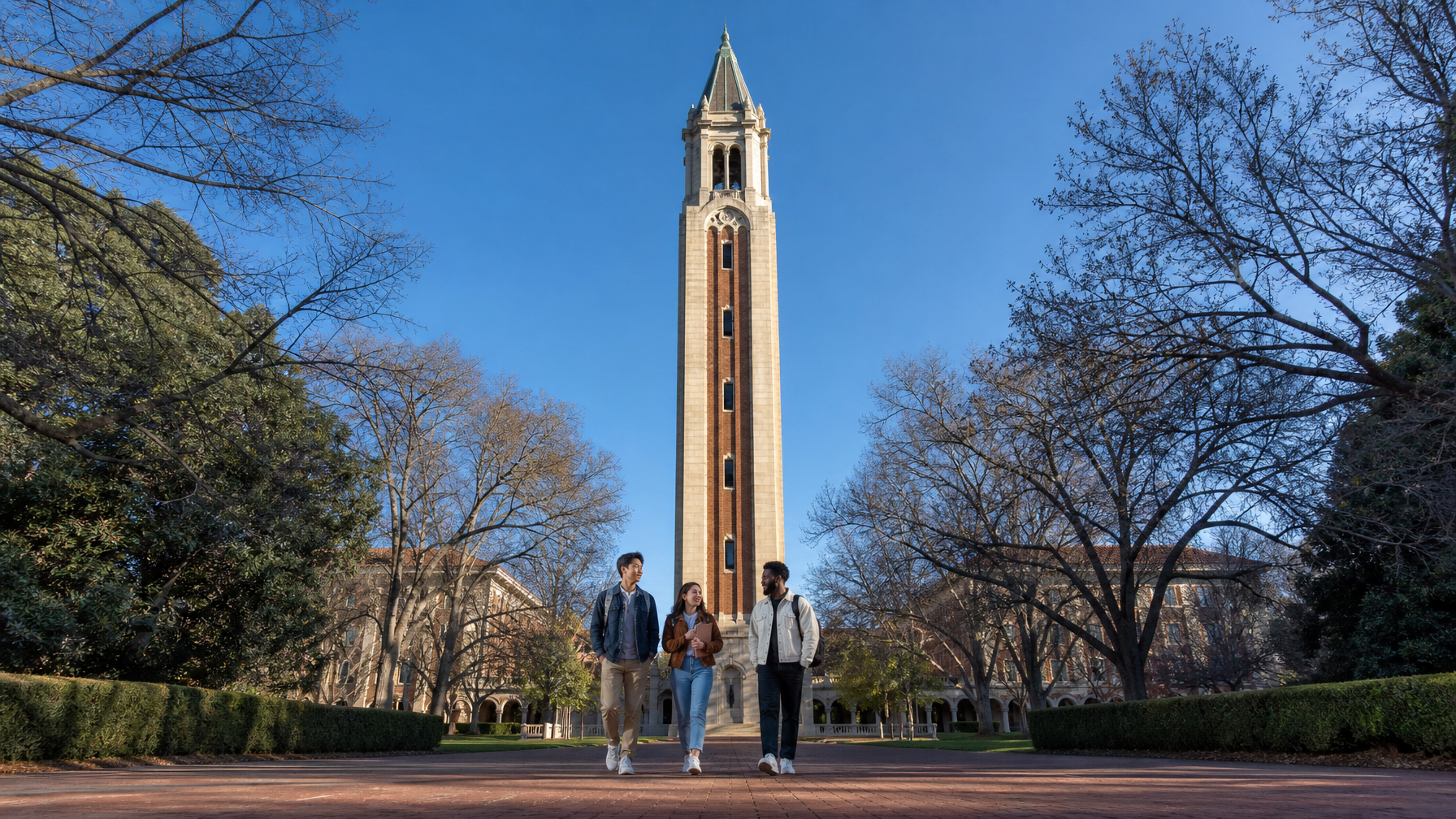
- Walk to the Memorial Belltower on the east side of Hillsborough Street. The Belltower is NC State's canonical photograph and a brief stop.
- For prospective students with a specific college direction, walk past the relevant buildings:
- College of Sciences buildings cluster on the central campus.
- Poole College of Management is in Nelson Hall on the south side.
- Humanities and Social Sciences buildings are near the Court of North Carolina.
- College of Education is in Poe Hall on the north side; verify any current building access notes on the visit page.
- End at Talley Student Union for a brief walk through. Talley is the central student building, with dining, meeting rooms, lounges, and study space.
For prospective design and architecture students, the College of Design buildings on the Brooks Hall corridor are worth a 15-minute walk-through — verify current public-access policies before walking in.
Mid-afternoon: Centennial Campus
Centennial Campus is the second academic district, about a mile southwest of Main Campus across a wooded ravine. The Wolfline shuttle connects the two; allow 10–15 minutes by shuttle or 5 minutes by car. The Centennial walk is essential for engineering, computer science, textiles, and applied research students.
Recommended path (about 1.5 miles):
- Start at the James B. Hunt Jr. Library — one of the most-photographed academic libraries in the United States, opened in 2013. The interior is open to visitors during library hours; walk through the bookBot automated book retrieval area, the rooftop terrace if accessible, and the high-ceilinged study spaces. Allow 30–45 minutes.
- Walk south past the Engineering Building II and Engineering Building III. The cluster of engineering buildings on Centennial is where most of the College of Engineering sits.
- Continue to the Wilson College of Textiles. The textile program is one of the largest and most distinctive in the country; even from the exterior, the dedicated building tells you something about how NC State organizes its identity.
- Walk through the surrounding industry-partner area. Centennial includes private-sector partners and research groups co-located with NC State labs; the visible mix of academic and industry buildings is part of why students who choose NC State often cite the career-pipeline access.
- End at Lake Raleigh, which borders Centennial Campus's south edge. The walking trail around the lake is a useful student-life detail.
For prospective veterinary students, the College of Veterinary Medicine is on a separate campus south of Lake Wheeler Road; visiting requires a longer drive and a separate appointment.
Late afternoon: Downtown Raleigh
After Centennial, drive or rideshare to downtown Raleigh — about 10 minutes. NC State students get to downtown regularly, and a 90-minute downtown walk gives the family a sense of what student weekend life looks like.
Recommended pattern:
- North Carolina State Capitol — free admission, free guided tours, the historic legislative building from 1840 (verify current open hours). Allow 30–45 minutes.
- North Carolina Museum of Natural Sciences — one of the largest natural sciences museums in the South, free admission for the main exhibits (verify current ticketing for special exhibitions). Allow 60–90 minutes; engaging for younger siblings and parents.
- North Carolina Museum of History — across the street from the Natural Sciences museum, with state-history exhibits. Allow 30–60 minutes.
For a longer afternoon, add the North Carolina Museum of Art west of downtown — its outdoor Museum Park is one of Raleigh's distinctive cultural assets.
Evening: Raleigh dinner and walk
Three reasonable evening patterns:
- Warehouse District: renovated industrial buildings turned into restaurants and bars, west of downtown. Crank Arm, Death and Taxes, Bida Manda (Lao restaurant). Reservations matter on weekends.
- Glenwood South: bar and restaurant district north of downtown — louder, more nightlife-focused. Less family-friendly for younger children.
- Morgan Street Food Hall: food hall with multiple counters; family-friendly, casual.
The Raleigh-Durham food guide walks specific options. For barbecue-curious families, The Pit downtown is one of the standard Raleigh barbecue stops.
Major-Fit Notes by College
NC State organizes undergraduates across multiple colleges. The visit should reflect the prospective student's interest:
College of Engineering
The strongest single-college identity at NC State. Engineering enrollment is large, and most undergraduate engineering happens on Centennial. For a prospective engineer, the Hunt Library + Engineering Buildings + industry-partner walk on Centennial is the core of the visit.
Ask: How does first-year engineering work — common curriculum or college-specific from the start? When do students apply to specific majors within engineering? What does the path from undergraduate research to industry internship look like?
College of Design
Architecture, industrial design, graphic design, and animation are housed in the College of Design, one of the most-distinctive programs at NC State and at any public flagship in the South. Studio culture is intense. The college has its own building cluster on Main Campus.
Ask: How does the design portfolio review process work? What is studio life like during the first year? How do design students interact with engineering on Centennial?
Wilson College of Textiles
The Wilson College of Textiles is one of the largest dedicated textiles programs in the United States and a globally regarded program for textile engineering, fashion and textile design, and textile management. It is on Centennial Campus.
Ask: How does the textile program connect to industry placements? What is the balance between traditional textile science and modern sustainable-textile or fashion-tech programs?
College of Agriculture and Life Sciences (CALS)
CALS is one of NC State's land-grant identity anchors. Programs span agriculture, biological sciences, food science, and agricultural and human sciences.
Ask: What does undergraduate research look like? How are students placed in working farms or extension programs? What happens to graduates of specific majors?
College of Sciences
Includes mathematics, physics, statistics, chemistry, and computer science (which is co-housed within engineering for some programs — verify current organizational structure).
Ask: How do undergraduate research opportunities open up in the first two years? What advising support exists for students considering graduate school?
Poole College of Management
Business school with concentrations across finance, marketing, supply chain, and information technology. Smaller than the engineering and sciences colleges but with strong RTP-connected internship pathways.
Ask: What does the business advising and recruitment timeline look like? How do students access internships in the Triangle?
College of Humanities and Social Sciences and College of Education
Smaller in absolute size than the sciences and engineering colleges, but central to NC State's identity as a comprehensive public university. Worth a Court of North Carolina walk-through and questions about advising and class sizes.
Questions to Ask on the Tour
About academics and majors
- "How does first-year scheduling work for [specific college / major]?"
- "What does the path from Main Campus to Centennial look like for an engineering student — when does the move happen, and how often do students cross back?"
- "How do students switch majors or colleges, and what are the common paths students take?"
- "How does NC State's relationship with RTP show up in the undergraduate experience? Internships? Co-ops? Specific programs?"
About housing and student life
- "What does first-year housing look like, and how do students choose roommates?"
- "What are the typical sophomore-and-up housing patterns — on-campus, near-campus apartments on Hillsborough, or further off?"
- "How does the Wolfline shuttle work for a typical student week? How often do students bike or drive?"
About research and career
- "How do undergraduates find their first research placement?"
- "What kind of internships do typical [specific major] students get during summer?"
- "What recruiters or industries come to campus for career fairs?"
- "How do students from [specific country / region] typically navigate visa and post-graduation work?"
About city life
- "How often do students get to downtown Raleigh? What for?"
- "What does a typical weekend look like for a sophomore who likes [music / hiking / food / sports]?"
- "How does NC State feel different from Duke or UNC for student life?"
What Younger Siblings Get
NC State's campus and Raleigh's downtown are both genuinely family-friendly:
- The Memorial Belltower is a strong photo stop and a quick walk.
- The Hunt Library is one of the most-impressive academic library interiors in the country; younger siblings find the bookBot system, the modern furniture, and the colorful study spaces engaging without needing to read.
- Pullen Park, on the east edge of campus, is one of the oldest amusement parks in the United States and a strong family stop after the campus visit. The carousel, train, and pedal boats engage younger ages.
- The North Carolina Museum of Natural Sciences downtown has dinosaur skeletons, a four-story discovery exhibit, and live animals; it is one of the most-engaging family museums in the South.
- Lake Raleigh at the south edge of Centennial is an easy short walk after the campus tour for families wanting outdoor decompression.
- Downtown food halls like Morgan Street give younger siblings options without committing to a single restaurant menu.
For families with very young children, the natural science museum and Pullen Park together fill an easy afternoon and evening, even if the campus walk has been long.
Beyond the Visit
A useful NC State visit produces specific application material:
- Buildings or spaces the student noticed — the Hunt Library, a specific Wilson College of Textiles studio, an engineering lab.
- Concrete student conversations — what current students said about advising, class sizes, the Centennial commute, or career-recruitment culture.
- A clear sense of fit — not just "NC State seems good for engineering" but "NC State fits because [specific program / Centennial setup / Raleigh setting / textiles or design strength]."
- Comparison notes if visiting multiple Triangle campuses.
NC State's identity is unmistakably "applied, public, research-driven, Raleigh." A visit that walks both Main and Centennial, plus a downtown Raleigh afternoon, captures the institution and the city in one day. Skipping Centennial — or skipping downtown — leaves the family with an incomplete picture of what students actually do for four years.
For the broader Raleigh context — the Capitol, Mordecai Historic Park, NCMA, and Pullen Park — see the Raleigh campus visit landmarks article. For Duke, NCCU, and UNC comparisons, see the Triangle campus fit guide.